Key Takeaways
- Project cost estimation is an iterative process: estimate quality depends on the maturity of the scope, underlying assumptions, available data and how uncertainty is accounted for.
- A credible estimate should make key cost drivers, assumptions and risk exposure visible rather than creating false precision around a single figure.
- The choice of estimation method should reflect the quality of available data, scope maturity and level of uncertainty, with different approaches suited to different circumstances.
- Managing costs effectively requires more than tracking spend: forecasting cost-to-complete, challenging assumptions and controlling changes can provide earlier warning of budget pressure.
Estimating project costs accurately is essential for making sound decisions about scope, resources and investment. However, producing a credible estimate is rarely as simple as adding up expected expenditure. The quality of the underlying data, assumptions, cost drivers and level of uncertainty can all influence how reliable an estimate will be.
This guide explores the principles and methods behind effective project cost estimation, from building an estimate and accounting for uncertainty to monitoring costs and managing changes throughout delivery. We also consider how PPM tools can support greater visibility and control over project costs.
Table of Contents
What is project cost estimation?
Why is project cost estimation important?
How do you estimate the cost of a project?
What are the four methods of cost estimation?
What are the five main types of project costs?
How to avoid project budget overruns
How a PPM tool can help with project cost estimation
FAQs

What Is Project Cost Estimation?
Project cost estimation is more than putting a price against a list of project activities. For experienced project professionals, the challenge is usually less about identifying individual costs and more about producing an estimate that remains credible when assumptions, scope and delivery conditions change.
The reliability of an estimate depends heavily on the quality of the information behind it. Early estimates often involve significant uncertainty, particularly where requirements are still developing or there is limited historical data to draw on. As the project moves through planning and delivery, assumptions can be tested against actual costs and replaced with more reliable information.
This makes project cost estimation an iterative process rather than a one-off exercise. A useful estimate should make its assumptions visible, reflect known risks and uncertainty, and provide a realistic basis for forecasting rather than creating a false sense of precision.

Why Is Project Cost Estimation Important?
The value of project cost estimation is not simply in producing a number that can be approved as a budget. A robust estimate gives project managers and decision-makers a clearer view of the financial implications of the proposed scope, the assumptions behind the forecast and where the greatest areas of uncertainty lie.
It can also provide an early indication of whether the planned approach is realistic. If the estimated cost changes significantly as better information becomes available, that can point to an issue with the original scope, assumptions, resource model or delivery approach — not simply a problem with project performance.
For this reason, cost estimation and cost control are closely connected. Comparing the latest forecast with the original estimate helps distinguish between normal variation and emerging problems, giving project teams an opportunity to investigate and respond before cost pressures become difficult to recover.

How Do You Estimate the Cost of a Project?
There is no single calculation that works for every project. A practical project cost estimation process can be broken down into five steps.
1. Define the Project Scope
Start by establishing exactly what the project needs to deliver. This should include the main deliverables, requirements, activities, timescales and any agreed limitations.
The clearer the scope, the easier it is to identify the work and resources that need to be included in the estimate. It also reduces the risk of costs being missed because they were not considered during planning.
2. Identify the Required Resources
Next, determine what is needed to complete the work. This could include internal employees, contractors, materials, equipment, software, facilities or specialist services.
Consider both what is required and for how long. For example, the cost of a specialist resource will depend not only on their rate but also on the amount of time they are expected to work on the project.
3. Calculate the Costs
Estimate the cost of each resource or activity and combine these figures to establish the overall project estimate.
Where possible, use reliable information such as supplier quotations, current rates, previous project data or established organisational costs. Breaking the estimate down into smaller components makes it easier to identify assumptions and spot missing costs.
4. Account for Risks and Uncertainty
Projects rarely go exactly according to plan, so an estimate should reflect the uncertainty involved.
Consider the risks that could increase costs, such as delays, changes to requirements, resource availability or unexpected technical issues. A contingency allowance can then be included where appropriate.
The amount of contingency should be based on the level of uncertainty and risk rather than simply adding an arbitrary percentage to the budget.
5. Review and Update the Estimate
A project estimate should not necessarily be treated as a fixed figure from the moment it is created. As the project progresses, assumptions can be replaced with better information and forecasts can become more accurate.
Review the estimate when there are significant changes to scope, resources, timescales or known risks. Comparing the latest forecast with the original estimate can also highlight emerging cost pressures early.

What Are the Four Methods of Cost Estimation?
Different situations call for different approaches to cost estimation. The four commonly used methods are Analogous estimation, Parametric estimation, Bottom-up estimation, and Three-point estimation:
| Cost estimation method | What it involves | Best suited to |
|---|---|---|
| Analogous estimation | Uses costs from similar previous projects to estimate the current project. | Projects with comparable historical data |
| Parametric estimation | Uses historical data and measurable variables to calculate an estimated cost. | Projects with reliable data and predictable relationships |
| Bottom-up estimation | Estimates individual tasks or work packages before combining them into an overall figure. | Projects with well-defined scope and detailed work breakdown |
| Three-point estimation | Uses optimistic, pessimistic and most likely estimates to account for uncertainty. | Projects where costs are difficult to predict |
These methods can also be used alongside one another. For example, historical data might provide a useful starting point, while bottom-up estimates can provide greater detail once the project scope is better understood.

What Are the Five Main Types of Project Costs?
The costs included in a project estimate will vary depending on the type of work being undertaken, but five common categories are:
-
Labour costs: Salaries, contractor fees and other costs associated with the people delivering the project.
Material costs: Raw materials, components, supplies and other physical items required.
Equipment costs: The purchase, rental, maintenance or operation of equipment used during the project.
Overhead costs: Indirect costs associated with delivering the project, such as facilities or administrative expenses.
Contingency costs: Money set aside to address identified risks or unexpected costs.
Separating costs into categories makes the estimate easier to review and helps project managers understand where the largest areas of expenditure lie.

How to Avoid Project Budget Overruns
Accurate estimation is only the starting point. During delivery, project teams need to monitor not just actual expenditure but also committed costs, remaining work and the latest cost-to-complete forecast. A project can appear to be within budget while changes in scope, resource requirements or delivery conditions are already putting the final cost under pressure.
Regularly comparing the latest forecast with the approved budget provides an early indication of emerging cost pressure. Focus particularly on the assumptions and cost drivers with the greatest influence on the overall forecast, rather than treating every variance as equally significant.
Where actual costs consistently differ from the original estimate, challenge the assumptions behind it rather than simply adjusting the forecast. Persistent variances may indicate that the original resource model, scope assumptions or delivery approach needs to be reassessed.
Change control is equally important. Assess the financial impact of scope changes before they are incorporated, including any knock-on effects on resources and timescales. Keeping the base estimate, contingency and approved changes visible also makes it easier to distinguish between normal cost variation, emerging risk and genuine budget pressure.
How a PPM Tool Can Help With Project Cost Estimation
PPM tools can help project teams improve cost estimation by bringing project, resource and portfolio information into one place, providing greater visibility of the factors that influence project costs. Our PPM tool, PM3, provides this visibility through a range of capabilities that support resource planning, reporting and portfolio decision-making.
Resource Visibility
PM3 provides visibility of resource availability and skills, helping teams plan and assign resources while identifying potential bottlenecks. This can support more informed estimates of resource requirements and associated costs.
Reporting and Insight
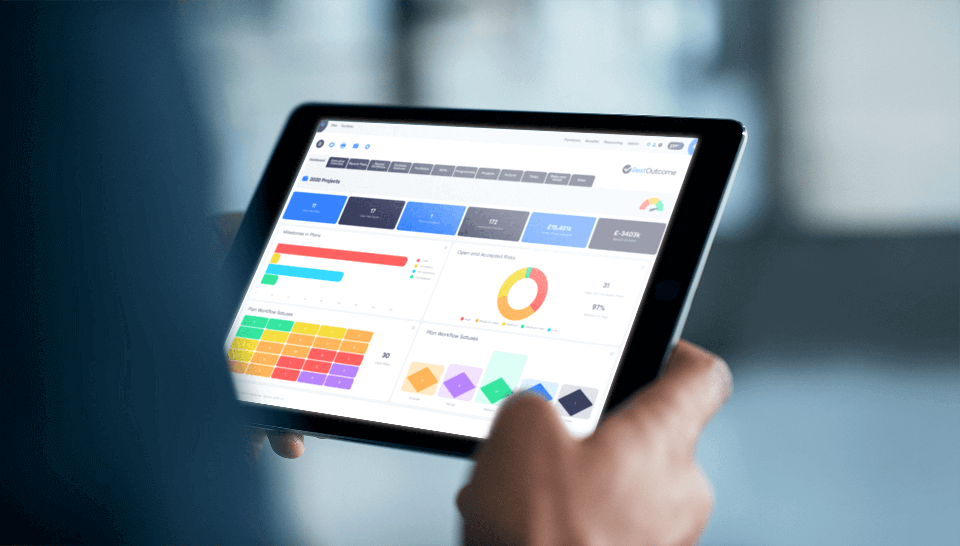
PM3 includes 200+ out-of-the-box reports and drill-down dashboards, with the option to create custom reports using drag-and-drop functionality. This provides clearer visibility of project information for teams and stakeholders.
Portfolio Alignment
PM3 allows organisations to evaluate and prioritise initiatives based on impact, strategic alignment and resource capacity, helping ensure investment remains focused on what matters most.
Benefits and Value
PM3’s benefits realisation capabilities help organisations track, measure and optimise benefits throughout delivery, keeping project investment connected to expected business value.
FAQs
How do I estimate the cost of a project?
Define the project scope, identify the resources required, estimate the cost of each activity or resource, account for risks and uncertainty, and review the estimate as more information becomes available.
What are the four methods of cost estimation?
The four commonly used methods are analogous estimation, parametric estimation, bottom-up estimation and three-point estimation. The most appropriate method depends on the project’s scope, available data and level of uncertainty.
What are the five main types of project costs?
The five main types are labour, materials, equipment, overheads and contingency costs. Not every project will have significant costs in each category.
What is the most accurate cost estimation method?
There is no single method that is always the most accurate. Bottom-up estimation can provide detailed results when the scope is well defined, while three-point estimation can be useful where there is greater uncertainty.
What causes project cost overruns?
Common causes include inaccurate initial estimates, unexpected risks, changes to project scope, resource issues and insufficient cost monitoring. Identifying these issues early gives project teams more opportunity to control their financial impact.
When should project costs be estimated?
Cost estimation should take place during project planning, before the budget is approved. Estimates should then be reviewed and updated when significant changes or new information affect the expected cost.
Image Sources: Astrid IQ
