Key Takeaways
- Strategy execution rarely fails in some dramatic moment. It drifts. Too many initiatives, weak prioritisation, unclear ownership, poor visibility, and governance that reports instead of deciding.
- A strategic PMO helps close the gap between strategy and delivery: it turns strategy into phased work, surfaces risk early, manages scarce capacity, holds sponsors to account, and keeps initiatives tied to commercial outcomes.
- The real value of a PMO is simple. It helps leaders make better decisions, earlier, with clearer evidence about priorities, risk, capacity, and outcomes.
Strategy execution comes down to two fundamental ingredients: the quality of sponsorship, and whether an organisation can turn ambition into work that is focused, governed, and properly resourced. When a PMO has the right mandate, it gives leaders the structure, the evidence, and the honest challenge they need to connect priorities, guide decisions, and stop the drift before it sets in.
Most organisations don’t struggle because they lack ambition. They struggle because ambition gets turned into activity without enough discipline, visibility, or authority to decide. A strategy is set. A roadmap is built. Projects start. And as the new work gets going, a gap quietly opens between what the strategy intended and what actually happens day to day.
This isn’t a small problem. Research found that 61% of executives said their organisations often struggled to bridge the gap between setting a strategy and putting it into practice, with only 56% of strategic initiatives proving successful over a three-year period.
That gap will be familiar to any PMO director, transformation lead, strategy director, COO, CIO, or CFO who has watched a portfolio get busier without getting more valuable.
New priorities appear. Leaders back initiatives that feel urgent but were never properly tested. Projects build momentum before anyone has asked whether they are actually worth doing. Governance meetings turn into status updates. Reports multiply. People get stretched across too many commitments. Before long the organisation is busy… but it isn’t really moving in the right direction to achieve the vision/strategy.
Strategy execution rarely fails in one dramatic moment. It fails through drift.
Table of contents:
1. Where the Strategy-to-Delivery Gap Begins
2. Why Too Many Initiatives Weaken Execution
3. Governance That Supports Better Decisions
4. Why Portfolio Visibility Matters
5. Resource Capacity and the Reality of Delivery
6. How the PMO Can Become More Strategic
7. The Role of AI, Tooling, and Simplicity
FAQs

Where the Strategy-to-Delivery Gap Begins
We tend to treat the move from strategy to execution as a handover. Senior leaders set the strategy, agree the broad destination, and assume the rest of the organisation will turn it into action. That handover is where a lot of transformations start to become vulnerable.
A strategy can look compelling on paper. But unless it’s connected to a practical, prioritised, governable roadmap, it’s vulnerable almost straight away. The organisation moves from clarity to interpretation. Different teams read the same strategy through their own individual lens and associated pressures. Functional leaders protect their own goals. New initiatives appear. What started as alignment slowly becomes variation…
I find it helps to treat the translation as six plain steps:
- Start with the board’s ambition. Define the outcomes the organisation has to deliver.
- Break that ambition into 12-month portfolio themes, so people focus on what has to move now with an engaging enough time horizon.
- Turn those themes into funded initiatives with clear and accountable sponsors.
- Test the plan against capacity.
- Set benefits milestones, so progress is judged against outcomes rather than activity.
- Agree the governance cadence, with the right people in the room to actually decide.
Long-term strategies create a particular problem. Most people in the organisation live on much shorter horizons: quarters, budget cycles, whatever is in front of them this week. Breaking a strategy into six or 12-month phases gives everyone something they can hold on to, and lets leaders say plainly what has to be achieved now.
Here’s a simple test. Can each major initiative be linked to a current strategic phase, a named outcome, a funded commitment, and an accountable sponsor? If it can’t, it’s probably just activity ‘noise’ rather than execution of defined strategic ambitions.
And momentum isn’t created by announcing a strategy. It’s created when people see the organisation actually delivering against it.

Too many initiatives is a leadership problem, not a workload problem
Almost every portfolio leader knows the complaint: we’re doing too much. Most of the time that’s a symptom of something deeper.
Too many initiatives get into the portfolio because organisations find it hard to say no, pause, or stop. Senior leaders bring in what feel like great opportunities without properly weighing the cost, the resource demand, or how relevant it really is to the strategy. These tempting distractions are dangerous precisely because they arrive with an executive’s energy behind them.
And once something is in flight, it’s hard to stop. People are invested. Money has been spent. Teams have been assigned. Sponsors don’t want to admit an initiative shouldn’t have started. So the portfolio piles up work, but not necessarily value.
When every initiative has an executive sponsor, prioritisation turns political fast, unless leaders agree the evidence before they argue about the answer. The strongest portfolio conversations start with agreed criteria: strategic alignment, value, capacity, risk, timing, and how confident we really are in the benefits.
So the question isn’t “whose project matters most?” It’s “which work best supports the strategy we’ve agreed, and what are we prepared to stop so it can succeed?”
Prioritisation should be a commercial discipline, using the same questions every time:
- Strategic alignment: Does it directly support the current strategic phase?
- Value potential: Is the commercial, customer, regulatory, or operational value clear?
- Urgency: Is the timing genuinely critical, or does it just feel urgent to one function?
- Regulatory or risk necessity: Is the work mandatory, or does it reduce real risk?
- Capacity demand: Do we actually have the people and skills to deliver it properly?
- Dependency impact: Does it unblock other strategic work, or does it get in the way of it?
- Benefits confidence: Is there credible evidence the value can be realised?
- Executive accountability: Is the sponsor genuinely owning the business outcome?
A mature portfolio function is willing to answer the awkward questions. Which initiatives are most clearly linked to strategy? Which are eating resource without a credible return? Which are politically protected but commercially weak? Which should be stopped, slowed, merged, or reshaped?
Without those decisions, the portfolio becomes a museum of old commitments rather than a live expression of what we’re trying to do now.

Governance should enable decisions, not create bureaucracy
Governance has an image problem, and in plenty of organisations it has earned it. Forms, gates, templates, committees, delay. But good governance is really just the structure that lets the right people make the right decisions at the right time to unblock roadblocks and accelerate delivery and benefit realisation.
The most common failure is turning governance forums into progress-tracking meetings. Updates get given. Risks get reviewed. And no actual decision gets made…
Here’s the distinction I keep coming back to… If governance is designed to control activity, it becomes defensive. If it’s designed to improve decisions, it becomes strategic and an enabler.
Progress should be reported outside the room. The time in the room should be spent on choices: whether to continue, redirect, fund, escalate, deprioritise, move resources, or step in.
Good governance brings the right decision-makers together around the things that matter most: which outcomes are under threat, where benefits are weakening, where capacity is tight, and what needs to be stopped, paused, sped up, or escalated. Keep it proportionate to the size, risk, and complexity of the work, and make sure there’s enough authority in the room to turn evidence into a decision.

Visibility is the foundation of strategic control
Portfolio transparency isn’t about producing more reports. More reporting can actually make things worse. The issue was never the volume of information. It’s whether the information helps leaders understand performance, risk, value, and alignment in order to be a catalyst for better leadership effectiveness.
At portfolio level, visibility has to connect the delivery work to the strategic ambition. Strong execution depends on leaders being able to see whether the portfolio, as a whole, is moving the organisation towards the outcomes it committed to.
A board should be able to see, within minutes, which strategic outcomes are under threat, which initiatives are causing the pressure, and what decision is needed.

Resource capacity is where strategy meets reality
Every strategy eventually meets capacity. Organisations can approve more work than they can realistically deliver. What they can’t do is avoid the consequences.
Resource capacity planning is one of the hardest parts of portfolio management, because it relies on good data from right across the business. A lot of the people supplying that data are operational leaders, functional managers, and delivery teams already juggling several demands. If the process is complex, inconsistent, or badly tooled, the data becomes low quality, low value, and goes off quickly.
Without a clear view of resource, portfolio decisions become political. Leaders argue from instinct, preference, or local interest. Capital and people stay stuck on initiatives that may no longer deserve them.
The numbers here are sobering. Only about 12% of business transformations achieve their original ambition, and roughly 90% of transformation value tends to come from less than 5% of roles. In other words, overloaded portfolios usually lean on the same handful of scarce specialists and go-to people.
Portfolios get fragile when the headcount looks fine on paper, but the organisation is short of the specific roles that actually matter. Leaders need a consistent view of availability, critical skills, what each initiative is demanding, its priority, and how much they trust the assumptions underneath.
The aim isn’t perfect data. It’s good enough visibility to support better decisions, earlier interventions, and more honest conversations about what the organisation can really deliver.

Rolling Wave Planning: The Ultimate Strategy to Deliver Project Success
Learn how to apply rolling wave planning to keep projects on track.
The PMO must stop accepting an administrative identity
A PMO that reports from the lower layers of the organisation will always struggle to shape strategy execution. It lacks the sponsorship, the authority, and the closeness to the decisions that shape the portfolio.
If you want the PMO to operate at enterprise level, it needs senior sponsorship from someone who can connect strategy, funding, delivery, and accountability. A CEO might give an enterprise PMO cross-functional authority for a period of major transformation. A CFO might sharpen investment discipline, benefits tracking, and value management. A COO might anchor it in how the operating model actually runs. A CIO might be the right sponsor for a technology-heavy portfolio. The title matters less than whether the sponsor can influence decisions across the organisation and hold relevant accountability for successful portfolio delivery.
With the right mandate, the PMO moves from administrative support to something far more useful: helping leaders decide. It helps them make trade-offs, surface risk, prioritise better, and keep delivery pointed at commercial outcomes. BCG describes the transformation office as a “nerve centre for workstreams, timelines, priorities, and value tracking” with the potential to improve value creation by up to 50%.
Strong strategy execution depends on the PMO being able to influence decisions about value, investment, risk, operating impact, and the trade-offs the strategy demands.

AI can help — but it cannot replace leadership
Tooling matters, because portfolio management runs on reliable information. In most organisations the most useful tools are the ones people can actually keep up to date and understand quickly. If a system is hard to use, adoption levels are low: teams avoid it, misuse it, or worse, feed it poor data.
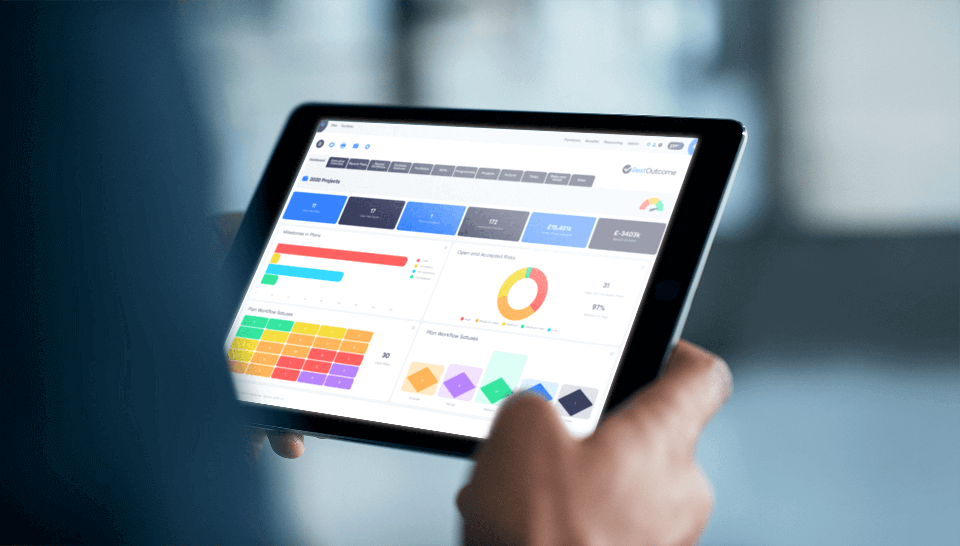
The aim should be clarity, not complexity. A good PPM tool makes it easier to see what’s being delivered, where the risks are building, which initiatives are competing for the same capacity, and where leaders need to act. Clever functionality is worth very little if only a specialist can use it.
AI can push this further. It can help teams analyse bigger portfolios, summarise project updates, spot recurring risk patterns, map dependencies, and flag where benefits or capacity are coming under pressure. It can turn scattered project information into clearer portfolio insight, and give leaders a faster read on what needs their attention.
But AI can’t compensate for weak governance, unclear accountability, poor data, or a lack of leadership discipline. You still need human oversight, clear data standards, an audit trail, and people willing to own the decisions. AI is at its best when it helps leaders see the portfolio more clearly and act sooner. It doesn’t decide for them.
Portfolio management is where strategy execution becomes practical
Strong portfolio management gives an organisation a practical operating system for executing strategy across strategic pillars/themes. It connects ambition to priorities, funding, capacity, governance, sponsorship, and real delivery evidence.
That operating system needs clear goals, visible priorities, disciplined governance, honest conversations about resource, accountable sponsorship, and information that genuinely helps leaders decide. It also needs the nerve to stop work that no longer serves the strategy.
Organisations with stronger portfolio management find complexity easier to handle. They draw a clearer line between ambition and delivery. They reduce the drift, and they help people understand why their work matters.
In the end, the PMO earns its strategic influence in one way. By helping leaders make better decisions, and keeping delivery focused on the outcomes the organisation has committed to achieve.
This article is based on a wider discussion about strategy execution, portfolio governance, PMO maturity, capacity planning, and the role of AI in modern portfolio management. Watch the webinar below for the full conversation and more practical examples of how organisations can reduce drift between strategic ambition and delivery.
FAQs
What is strategy execution?
Strategy execution is turning strategic ambition into coordinated, prioritised, measurable delivery. It needs clear goals, active governance, resource discipline, accountable sponsorship, and a real view of whether the organisation is getting closer to the outcomes it has defined in its strategic objectives.
What does a strategic PMO do?
A strategic PMO connects strategy, funding, delivery, risk, benefits, and accountability. Instead of acting as a reporting layer, it provides usable executive insight, improves prioritisation, supports decision-led governance, and helps leaders keep the portfolio aligned to strategic outcomes.
How can a PMO improve strategy execution?
A PMO improves strategy execution by translating strategy into phased delivery, turning delivery data into executive insight, helping leaders prioritise initiatives, managing resource capacity, strengthening governance, and holding sponsors accountable for outcomes.
How do you know if your PMO is too administrative?
A PMO may be too administrative if most of its effort is spent chasing updates, maintaining templates, producing status reports, or enforcing process without influencing decisions. Warning signs include governance meetings with no real choices, dashboards that do not change leadership action, and limited involvement in prioritisation, funding, benefits, or capacity trade-offs.
What is decision-led governance?
Decision-led governance is governance designed around choices, not updates. It focuses leadership time on trade-offs, escalations, benefits at risk, capacity conflicts, and actions with clear owners. Progress reporting can happen outside the meeting; governance time should be reserved for decisions.
Can AI improve portfolio management?
Yes. AI can support portfolio management by summarising status, detecting risk patterns, mapping dependencies, forecasting resource demand, analysing benefits variance, and improving exception reporting. However, AI should be governed carefully. It depends on data quality, human validation, auditability, and accountable leadership decisions.
Image sources: Astrid IQ
