Key Takeaways
- PPM helps organisations manage projects and programmes as one portfolio, keeping investment aligned with strategic priorities.
- It supports better decisions about which projects to start, continue, pause, re-scope or stop.
- PPM gives a portfolio-wide view of resources, risks, dependencies and delivery performance.
- It helps leaders focus budget, capacity and attention on the work that delivers the most value.
What is PPM? Project portfolio management (PPM) is the discipline of selecting, prioritising and overseeing projects and programmes as a portfolio, so that investment, resources and delivery remain aligned with an organisation’s strategic objectives.
Rather than looking at projects in isolation, PPM gives organisations a portfolio-wide view of where time, budget and capacity are being used. This makes it easier to compare competing priorities, manage risks and dependencies, and decide which initiatives should start, continue, change direction or stop.
In this guide, we explain what PPM means in practice, what a PPM function is responsible for and how it helps organisations make better portfolio-level decisions.
Table of Contents
What is PPM? A Definition and its Objectives
Why is Project Portfolio Management important?
Selecting and Prioritising the Right Projects
Defining Project and Programme Delivery Standards
Balancing Resource Demand and Capacity
Ensuring Dependencies are Understood Across the Portfolio
Managing Portfolio-Wide Change Impact
Ensuring Portfolio Risks are Understood and Mitigated
Identifying failing projects early
Providing C-suite executives with the ‘big-picture’ on the portfolio
Who Is Responsible for Project Portfolio Management?

What is PPM? A Definition and its Objectives
Project portfolio management (PPM) is the discipline of selecting, prioritising and overseeing projects and programmes as a portfolio, so that investment, resources and delivery remain aligned with an organisation’s strategic objectives.
Rather than managing projects in isolation, PPM looks across the entire portfolio. This gives organisations a clearer view of competing priorities, resource demand, risks, dependencies and expected benefits, helping leaders decide where time, budget and capacity should be focused.
PPM is sometimes confused with PRINCE2, but they serve different purposes. PRINCE2 is a project management methodology, while PPM operates at portfolio level and can be applied across projects regardless of the methodology they use.
It is also useful to distinguish between PPM as a discipline and the PPM function responsible for applying it. PPM is the management process and decision-making framework, while the PPM function or PMO provides the people, governance and oversight needed to put that approach into practice.
Together, this gives stakeholders a portfolio-wide view of projects and programmes, rather than a series of separate project updates.
Once you understand what PPM is, the next step is choosing the right software to support it. Our PPM tool buyer’s guide covers what to look for when comparing PPM tools, including portfolio visibility, reporting, resource management, governance and integrations.
Why is Project Portfolio Management important?
Project portfolio management is important because it helps organisations make better decisions about where to invest their limited money, resources and attention.
Rather than simply monitoring more projects at once, PPM helps leaders assess which initiatives are most valuable, allocate resources where they are needed most, manage portfolio-wide risks and dependencies, and stop or re-scope work that no longer justifies further investment.
It also gives decision-makers a reliable view across the portfolio, making it easier to identify emerging problems, balance competing priorities and keep delivery aligned with strategic objectives.
These principles are particularly important in complex public sector environments, where governance, accountability and delivery requirements can add further challenges.
For a closer look at how technology can support this portfolio-level approach, read our guide to the benefits of PPM tools, including improved visibility, resource management, reporting and strategic decision-making.

Selecting and Prioritising the Right Projects
One of the key roles of the PPM or PMO function is to define the project evaluation process. There needs to be an agreed process whereby projects are evaluated against a set of organisational criteria. Each project is then compared and contrasted against other projects using these criteria which could include:
- Net present value
- Payback
- Fit to organisational strategy
- Risk of non-delivery of the benefits
- Risk of non-delivery of the project
- Regulatory requirements.
This evaluation approach allows the PPM function to recommend or agree the projects that pass the approval hurdles for delivery.
Without this centralised approach, projects can be initiated based on ‘decibel management’, i.e. which sponsor has the biggest voice and shouts loudest.
This decibel management approach is unlikely to deliver the optimum set of projects that the organisation needs delivered.
It helps that the PPM function is independent and can facilitate the evaluation process so it is done fairly and consistently.
The PPM function has a continuing role in evaluating projects. Not only is the PPM function key in selecting the projects that should be initiated, but they also have a role to keep assessing the active projects to ensure that they are still meeting the organisational hurdles required.
It could be that a project’s expected benefits have decreased since the original business case submission or the risks of delivery have become too great. The PPM function can add great value by stopping projects that no are no longer justified based on the agreed process.
Without a PPM function it is rare for a project manager or stakeholder to recommend that their project is stopped. Too often, without a PPM function, these projects will keep going to the bitter end – if they ever finish – instead of resources being reallocated to projects that are higher in priority.
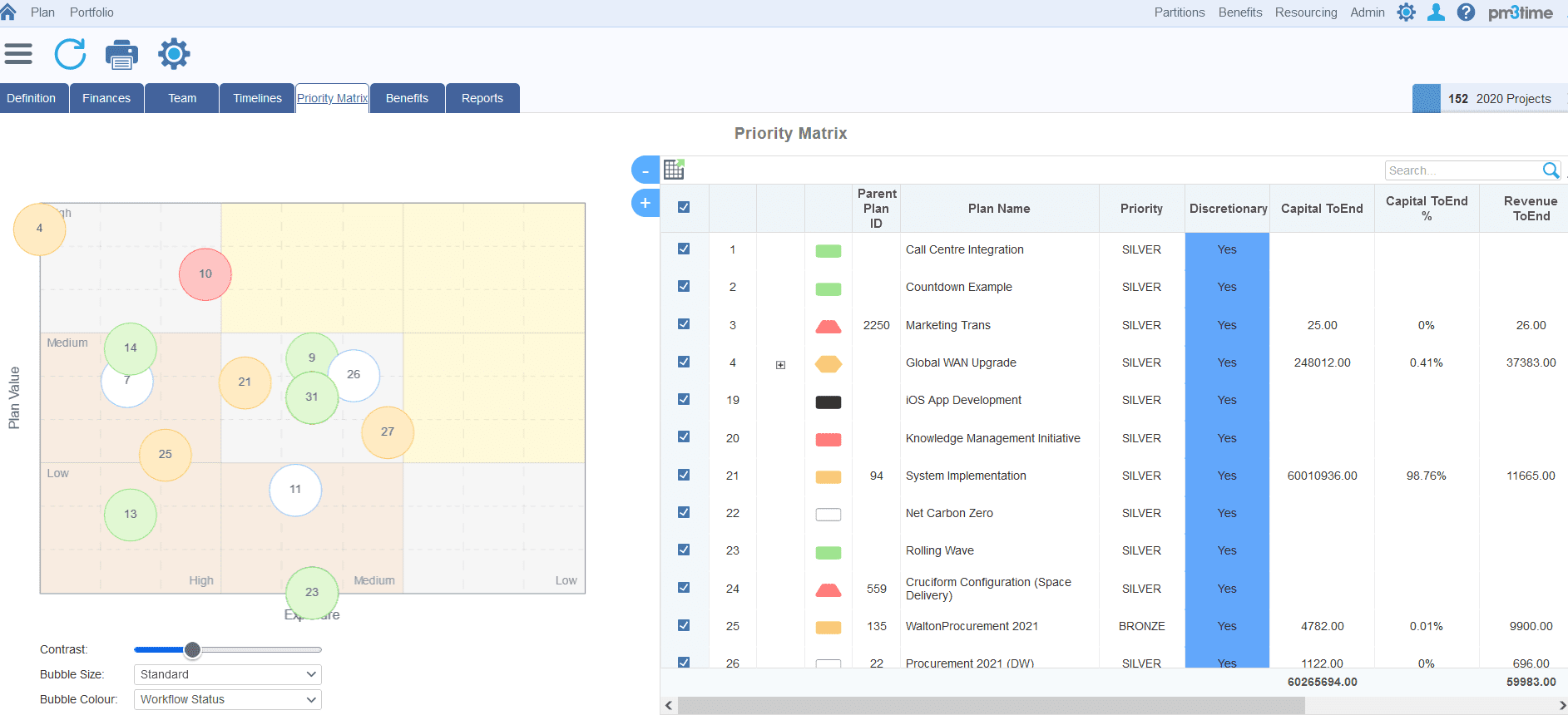
Portfolio Priority Matrix in PM3
Defining Project and Programme Delivery Standards
Without a central PPM function, there is the danger that each project or programme use different processes, templates and standards. This is not only inefficient but also confusing for stakeholders and sponsors who receive project information in a variety of formats.
Non-standard processes can be detrimental to delivery success.
Without agreed standards, situations can arise where a project manager does not use any structured process or uses an approach because they want to try something new.
I have seen agile processes being trialled on a project which were totally unsuitable for agile processes with the inevitable subsequent delivery failure.
The PPM function needs to be the custodian of processes and standards. They can also advise and guide project managers as to which delivery process is appropriate for their particular project.
Consistent processes and standards provide an important foundation for project delivery, but they are not an end in themselves. PMO maturity alone won’t fix delivery problems if those processes do not translate into better oversight and more effective project delivery.
In summary, having a set of delivery standards and delivery processes is not only efficient and cost-saving, it also supports delivery success.

Balancing Resource Demand and Capacity
Resource management at project level focuses on ensuring an individual project has the people and skills needed for delivery. Portfolio-level capacity planning looks across all projects and programmes to understand whether the organisation has enough capacity to deliver its priorities as a whole.
Once projects have been prioritised, the PPM function needs to compare resource demand across the portfolio with the capacity actually available. A portfolio may contain several valuable projects, but approving them all at once can create conflicts if they depend on the same people or specialist skills.
For example, two priority projects may need the same systems architects at the same time, while only a limited number are available. If those skills cannot be recruited or reassigned quickly, the organisation may need to adjust project timings or priorities rather than commit to work it cannot realistically resource.
Capacity planning is therefore an ongoing activity, not a one-off exercise. Regularly reviewing demand against capacity can highlight future resource pinch points and longer-term skills shortages early enough for the organisation to respond through recruitment, rescheduling or reprioritisation.
By taking this portfolio-wide view, the PPM function can help prevent over-commitment and ensure limited resources are focused on the work that matters most.
Ensuring dependencies are understood across the portfolio
Managing Dependencies Across the Portfolio
Portfolio dependencies arise when one project relies on another project, team, milestone or output before it can progress.
While project managers can manage dependencies within their own projects, cross-project dependencies require a wider portfolio view. The PPM function can help identify and track these connections, highlighting where delays or changes could affect other initiatives.
This matters because a delay that appears manageable within one project can create a much larger delivery problem elsewhere in the portfolio. By maintaining visibility of these dependencies, the PPM function can identify potential knock-on effects early and support better coordination across projects.
Managing Portfolio-Wide Change Impact
Every project can create change for the teams, departments or stakeholders it affects. While individual project teams can manage their own change activities, the PPM function needs to understand the combined impact of change across the portfolio.
Problems can arise when several initiatives affect the same part of the organisation at the same time. Individually, each project may have a realistic implementation plan, but collectively they can place too much pressure on the same teams or business areas.
A change-impact heat map can help the PPM function identify where change is concentrated and where potential conflicts are emerging. As project timelines shift, this view should be updated so that overlapping impacts remain visible.
Where too many changes are scheduled at once, projects may need to be re-sequenced or implementation dates adjusted. Portfolio planning should also account for periods when certain business areas have limited capacity for change, such as operational peaks or planned change freezes.
Ensuring Portfolio Risks are Understood and Mitigated
Individual projects will have their own risks, which project managers are responsible for identifying, monitoring and managing. The PPM function takes a wider view, identifying risks that could affect multiple projects or the performance of the portfolio as a whole.
Some portfolio risks may emerge from individual projects, while others may come from external or organisation-wide factors. The PPM function should maintain visibility of these risks, assess their potential portfolio impact and ensure appropriate responses or mitigations are considered.
Organisational risk appetite is also important. Some organisations may accept greater portfolio risk where the potential strategic benefit justifies it, while others may require a more cautious approach. The PPM function should help ensure portfolio decisions reflect the level of risk the organisation is prepared to accept.
Example of overall portfolio level risks include:
- External events, e.g. Covid-19
- Business environment changes, e.g. a new supplier enters the market
- Economic changes, e.g. a new tax regime
- Quality of delivery of the portfolio
Portfolio risk management should be continuous, with risks regularly reviewed as projects, priorities and external conditions change.
Identifying failing projects early
It can be rare for project a project manager to hold their hands up and say that the project they are delivering is failing and help is needed.
The PPM function needs to objectively assess each project in the portfolio in order to work out whether the project is failing or underperforming.
It may also be that the project delivery is not up to the required standard of the organisation. PPM needs to conduct stage gate reviews that essentially asks three questions:
- Does this project still have a valid business case?
- Is delivery performance acceptable?
- Should we continue, recover, re-scope, pause or stop it?
These questions, which are usually conducted as part of a stage gate review, will be able to identify failing projects and this will allow the PPM function to intervene to either bring projects back on track or stop the project(s) entirely.
This early intervention will save a lot of valuable resources as the quicker a failing project is stopped or brought back on track, the greater the cost saving.
Providing C-suite executives with the ‘big-picture’ on the portfolio
Project and programme managers will naturally report on the performance of their individual initiatives. However, senior leaders need more than a collection of project status updates. They need a portfolio-wide view that supports strategic decision-making.
Tracking the right project portfolio performance metrics can provide this wider perspective, helping leadership understand not only how individual projects are performing, but what that performance means for the portfolio as a whole.
Effective portfolio reporting should help leaders answer questions such as:
- Are we investing in the right work?
- Where is delivery at risk?
- Where are resources constrained?
- Are expected benefits still realistic?
- Which initiatives require a decision?
Providing this clear, reliable view of the portfolio is a key responsibility of the PPM function, enabling leadership to focus attention on the areas where action or intervention is needed.
Who Is Responsible for Project Portfolio Management?
Responsibility for PPM varies depending on the size and structure of the organisation, but it is typically shared across several roles.
A PMO or portfolio management function often coordinates the process, providing governance, portfolio reporting and oversight. Senior leadership and portfolio or programme leaders make strategic decisions about priorities and investment, while project sponsors provide accountability for individual initiatives. Project managers support PPM by providing accurate, timely information on delivery, risks, resources and performance.
PPM is therefore not simply the responsibility of individual project managers. It is a collaborative discipline that connects project-level delivery with portfolio-level oversight and strategic decision-making.
FAQs
What does PPM stand for?
PPM stands for Project Portfolio Management. It is the discipline of selecting, prioritising and overseeing projects and programmes as a portfolio to support an organisation’s strategic objectives.
What is PPM in project management?
PPM takes a broader view than individual project management. Instead of focusing on the delivery of one project, it looks across the portfolio to help organisations prioritise investments, balance resources and oversee performance, risks and dependencies.
What is the main purpose of project portfolio management?
The main purpose of PPM is to ensure an organisation invests its limited money, resources and attention in the right work. It helps leaders decide which initiatives to start, continue, re-scope, pause or stop.
Who is responsible for PPM?
Responsibility varies by organisation but often involves the PMO or portfolio management function, senior leadership, portfolio and programme leaders, and project sponsors. Project managers contribute reliable delivery information, but PPM is not solely their responsibility.
What does a PPM function do?
A PPM function helps coordinate and oversee the project portfolio. Its responsibilities can include prioritisation, governance, capacity planning, monitoring risks and dependencies, reviewing portfolio performance and providing leadership with information for decision-making.
What is the difference between PPM and a PMO?
PPM is the discipline and process of managing projects and programmes as a portfolio. A PMO is an organisational function or team that may be responsible for applying PPM processes, governance and standards, although the exact role of a PMO varies between organisations.
What is the difference between PPM and PPM software?
PPM is a management discipline, while PPM software is technology used to support it. Software can help organisations centralise portfolio information, reporting and resource visibility, but the technology itself does not replace effective governance and decision-making.
Does an organisation need PPM software to practise PPM?
No. Organisations can practise PPM without dedicated software by establishing clear processes for prioritisation, governance and portfolio decision-making. However, as portfolios become larger or more complex, PPM software can make it easier to maintain visibility and manage information consistently.
