The Missing Link Between Planning and Productivity
The UK construction productivity gap has been estimated as an opportunity worth around £15 billion a year. Yet improving productivity is not simply a question of working faster, adding more resource or checking whether a project is ahead or behind programme.
It depends on understanding how work is really performing, why delivery is changing and whether current progress is sustainable.
For many construction businesses, that remains difficult to achieve. Programmes are updated, progress is reported and management information is produced, but planning processes can vary from project to project. Valuable programme data often remains spread across schedules, spreadsheets and siloed systems.
The result is a disconnect between the programme and the reality of delivery. Closing that gap enables teams to identify risk earlier, compare performance more consistently and make better-informed decisions while there is still time to act.
Why productivity is hard to improve without visibility
Construction projects generate large amounts of data, but with multiple teams, systems and reporting methods involved, that information can quickly become fragmented.
Programme control becomes harder, reporting takes longer and emerging risks are easier to miss. Teams can end up spending more time reconciling what has already happened than acting on what is happening now.
For organisations managing multiple projects, this matters. Performance needs to be understood consistently, compared reliably and retained in a form the wider business can learn from.
Being on programme does not tell the whole story
Progress, milestones and completion dates are essential measures of project control, but they only show part of the picture.
Take two comparable packages of work, both expected to reach 50% completion by the end of the month. Both achieve that target, but one does so in line with the resources and production assumptions built into the programme, while the other requires additional labour, overtime or recovery activity.
Both may appear to be on programme, but the effort required to get there is very different.
Project control is not only about knowing where a project stands today. It is also about understanding whether current performance is sustainable and what it means for the remainder of the programme.
By comparing planned assumptions with actual performance, teams can strengthen forecasting and identify changes before they develop into more significant programme issues.
Connecting planning with actual delivery
Detailed, resource-driven planning helps teams understand what is driving the programme rather than relying on activity dates alone.
Asta Powerproject provides the detailed planning environment needed to develop and manage construction programmes, including resources and work rates. This gives planners a stronger basis for understanding how activities are expected to be delivered and assessing performance as the project progresses.
The principle is straightforward: plan realistically, measure progress regularly, understand where performance differs from the plan and use that insight to improve the forecast.
At project level, this supports better control. The bigger opportunity comes when those insights can be applied across the organisation.
From project planning to Connected Planning Intelligence
Construction organisations may be managing tens or even hundreds of projects at any one time, each generating valuable information about progress, changing assumptions, milestones, resources and risk.
When programmes remain isolated, much of that value stays within the individual projects they support. Bringing planning information together creates an opportunity to strengthen decision-making across the wider business.
Asta Vision extends the value of detailed planning by bringing programme information across projects into a more structured and consistent environment. Alongside Asta Powerproject, it enables organisations to move beyond individual schedules and develop planning as a stronger business capability.
This is the foundation of Connected Planning Intelligence, for Better Project Delivery.
The objective is not to collect more data. It is to make planning information easier to trust, compare and act on.
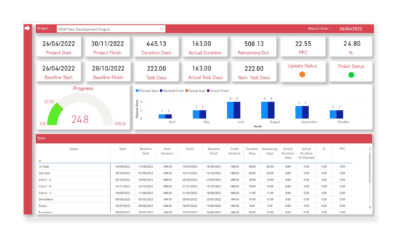
Greater consistency supports greater predictability
Meaningful comparison depends on consistency. When programme structures, planning processes and reporting approaches vary significantly between projects, establishing a dependable view across the portfolio becomes more difficult.
Standardisation helps address this. Common planning structures make information easier to compare, while clear version control and audit trails improve confidence in which information is current and provide greater transparency around programme changes.
For senior management, this creates a clearer view of where projects are progressing as expected, where delivery is beginning to deviate from plan and where time-related risk may require attention.
Greater consistency therefore supports greater predictability, giving teams more opportunity to manage change before it affects wider delivery, cost or contractual commitments.
From retrospective reporting to earlier intervention
Management reporting is most valuable when it creates time to act.
In many construction businesses, programme information is still exported, transferred into spreadsheets and incorporated into management reporting through processes requiring significant manual effort.
By the time an emerging issue becomes visible at portfolio or board level, some of the opportunity to influence it may already have been lost.
A more connected approach allows programme information to feed reporting and dashboards more directly. Project directors can recognise emerging issues earlier, while planners spend less time reconciling versions and preparing reports and more time interpreting performance and supporting delivery.
The value is not simply faster reporting. It is reducing the gap between what is happening on a project and what decision makers can see.
Turn project history into a business asset
The longer-term value comes from using what has worked, and what has not, on previous projects to improve future planning and delivery.
Every completed project contains valuable insight. Certain work packages may repeatedly take longer than expected, some resource assumptions may prove unrealistic, while sequencing approaches may consistently deliver stronger results.
When programme data is fragmented, these patterns are harder to identify, and valuable knowledge can remain with individual teams. Bringing that information together makes it easier to retain, compare and reuse what has been learned.
Historical performance can then strengthen benchmarking, inform future planning assumptions and provide a more evidence-based view of realistic delivery performance.
Over time, each project adds to the organisation’s understanding of how work is planned and delivered, helping to strengthen the projects that follow.
Connected planning in practice
This is where connected planning starts to create value beyond the individual project.
GMI Construction Group has used Asta Vision to bring together dynamic programme information from more than 20 live construction sites, replacing a monthly spreadsheet-based reporting process with greater visibility of programme performance.
Historical programme information has also enabled GMI to identify packages that repeatedly fall behind schedule, allowing that experience to inform preventative action on future projects.
In this way, programme data becomes more than a record of an individual project. It becomes a source of insight that can support better planning and more predictable delivery across the wider business.
Better productivity starts with better planning intelligence
Construction productivity is influenced by what happens on site, but it is also shaped by the quality and timing of the decisions made around delivery.
Those decisions depend on realistic planning assumptions, consistent project information, timely insight into performance and the ability to identify risk while there is still an opportunity to act.
Asta Vision, alongside Asta Powerproject, connects these elements across the planning lifecycle. By strengthening standardisation and governance, improving understanding of progress and emerging variance, and retaining valuable project data across the organisation, it helps move planning beyond a project-level control function.
Planning becomes a capability that enables the business to anticipate risk earlier, make more confident decisions and improve the predictability of project delivery.
When planning information is consistent, accessible and easier to act on, organisations can do more than report what has already happened. They can recognise change earlier, make better-informed decisions and carry what they learn from one project into the next.
That is where planning can have a greater impact on productivity: turning project insight into earlier action, greater predictability and better outcomes across the business.
See how Asta Vision can turn connected planning data into clearer decisions, greater predictability and stronger project delivery.